How to Plan Perfume Discovery Set Packaging
Five vials or eight. That single decision starts every serious conversation about perfume discovery set packaging. The count drives the box footprint, the insert layout, and the final price point together. A set with too few scents feels thin on arrival, while too many overwhelms a first-time customer deciding where to begin. The packaging has to sell the sampling ritual as much as the fragrances inside. This guide works through vial counts, insert design, presentation, labeling, and the shipping checks that keep glass intact.
Start with vial count and size
Most sets settle between four and ten vials. Smaller counts suit focused collections, such as a single fragrance family. Larger counts suit brand-wide samplers that lead a customer toward a full bottle. The count also sets customer expectations on price, so match it to your positioning.
There is a redemption angle worth planning early. Many brands include a voucher that credits the set price against a full bottle. If you plan one, reserve space for the card in the box footprint now.
Vial size shapes everything downstream. Common sample vials run 1 ml to 3 ml, with 2 ml as the popular middle. A 2 ml spray vial stands roughly 55 to 60 mm tall with its cap. Line up your chosen vials and measure the tallest one before any box drawing begins. The internal box height needs that measurement plus clearance for the insert floor and lid. Mixing vial sizes in one set complicates the insert, so standardize where you can.
Choose the insert layout
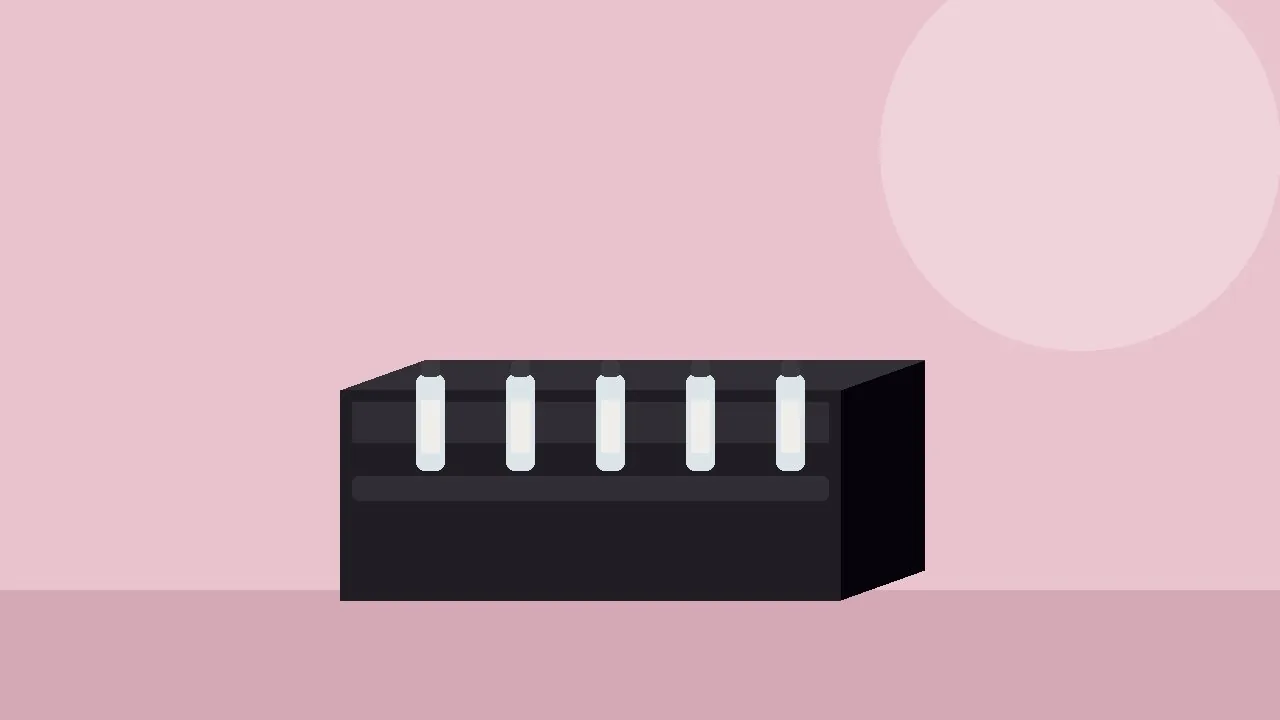
The insert holds each vial upright, spaced, and facing the customer. A row layout reads like a scent journey from first to last. A grid layout suits larger counts and square boxes. Angled platforms tilt vials toward the opener and photograph well for product listings.
Purpose-built perfume discovery set boxes usually pair a die-cut board insert with a printed platform. Foam and molded pulp appear at higher price points. Whatever the material, each cavity should grip the vial gently at its widest point. A vial that rattles reads as cheap, and one that sticks frustrates the unboxing. Test both failure modes with real vials before signing off the insert drawing.
Protect the glass samples
Sample vials are thin glass with light caps, and they travel in groups. Their main enemies are contact with each other and free movement inside the box. Neither shows up until a courier drops the parcel on concrete.
Cavity spacing solves the contact problem. Keep at least 6 mm of board or foam between neighboring vials. Depth solves the movement problem. Sink vials to about two-thirds of their height so lids cannot lever them out. A finger notch beside each cavity lets customers lift vials without prying. Dedicated perfume sample box formats handle both points with fitted platforms sized to standard vial diameters. Ask your supplier to confirm cavity tolerances against your exact vial spec sheet.
Arrange scent information
A sampler works only when the customer knows what they are smelling. Plan the information layer at the same time as the structure, not after the dieline is locked.
There are a few proven places to carry scent names and notes:
- Printed labels on or beside each cavity in the insert
- A printed card that sits above or under the vials
- Notes printed inside the lid where eyes land first
- A numbered system pairing vials with a small booklet
- A QR code linking to fuller notes and purchase pages
Choose one primary spot and keep it consistent across the set. Tiny vial labels alone are hard to read, so the insert or card should repeat every name in a larger size. Order matters as much as placement. Present lighter scents before heavier ones so early sampling does not fatigue the nose.
Plan the opening experience
Unboxing is the sales pitch. The lid should lift or slide with light, even resistance. The first view should show every vial at once, names visible, nothing hidden. Any card or booklet should sit above the vials, not buried beneath them.
Magnetic-closure rigid boxes give the strongest first impression for premium sets. Two-piece lid-and-base boxes cost less and still present well. Drawer boxes add a reveal motion that suits gift positioning. Interior color matters here too. A dark interior makes clear vials and gold caps stand out, while a pale interior suits colorful juice tones.
Think about the second opening as well as the first. Customers return to a set repeatedly over weeks of sampling. Hinges, magnets, and drawer runners must survive dozens of open-and-close cycles without loosening. A set that sags after a week quietly undercuts the brand it carries.
Shipping checks for perfume discovery set packaging
Discovery sets often ship straight to consumers, so the retail box needs a transit plan. The set box itself should never be the shipping container. Courier handling is rougher than any counter display will ever be.
Pair the presentation box with a snug outer mailer sized to add about 15 mm of cushioning on every side. Corrugated perfume shipping box constructions with fitted interiors stop the set sliding in transit. Seal vials with shrink bands or check spray closures before packing, because one leak scents the entire parcel. A leaked sampler is the fastest refund request in the fragrance business.
Weather deserves a thought too. Vials in a hot delivery van build internal pressure through an afternoon. Spray closures handle this better than plug caps, which is one more reason to standardize on them.
Preproduction checks
A short structured check before mass production catches nearly every planning mistake. Work through these steps with your supplier once physical samples arrive at your desk.
- Load a sample insert with your actual filled vials, not empty ones.
- Shake the closed box firmly and listen for any movement.
- Confirm every scent name is legible at arm’s length.
- Weigh the finished set and check it against your shipping rate tier.
- Drop-test the packed mailer from desk height onto a hard floor.
- Review print color on the physical box under warm and cool light.
Keep notes from each check beside your artwork files for the reorder. Discovery sets evolve, and recorded measurements make the next edition faster. Seasonal editions can then reuse the same insert with new printed skins, which trims cost per launch. If you are planning a set now, send your vial specs through our contact page for a quote. We will map perfume discovery set packaging options to your count, budget, and launch date.