Functional Perfume Packaging Boxes
This category covers the boxes that do a job rather than make an impression: transit cartons, oil packaging and counter testers. They are judged on whether the product arrives intact and whether they satisfy the rules that apply to shipping fragrance.

Get a price for Packaging Boxes
Tell us size, quantity and finish. A written quote comes back within 10 hours, with free design support and no obligation.
- 100 boxes minimum per design
- Free digital proof before anything prints
- Free shipping to the US, UK, Canada, Australia and New Zealand
Fragrance is a regulated shipment
Alcohol-based perfume is flammable, and that makes it a limited-quantity dangerous good in most air networks. Carriers apply their own rules on top of the regulations, and those rules govern outer packaging, labelling and sometimes the route your parcel takes.
We build cartons to the dimensions and construction your carrier requires, but we cannot certify a shipment on your behalf and we will not claim to. Confirm the current requirements with your carrier before you commit to a size, because the wrong outer dimension can put an otherwise fine box outside a limited-quantity allowance.
What actually breaks a bottle in transit
Bottles rarely break from a single dramatic impact. They break from repeated small shocks that loosen an atomizer, or from a compressive load when parcels stack in a trailer overnight.
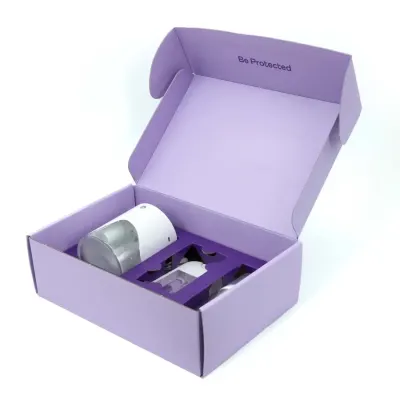
The two defenses are different. Shock is absorbed by clearance and a cushioning insert that suspends the bottle away from the walls. Compression is resisted by board grade and by the box being full enough that its walls are supported. A half-empty carton with a strong board still crushes, because there is nothing inside holding the panels apart. Our e-flute perfume shipping cartons are sized to the contents for that reason rather than offered in generic sizes.
Perfume oils leak differently
Oil-based fragrance behaves nothing like alcohol spray in packaging terms. It creeps, it stains paper permanently, and it degrades some adhesives. A leak that would evaporate harmlessly from an alcohol product leaves a visible mark on an oil shipment and ruins the box it sits in.
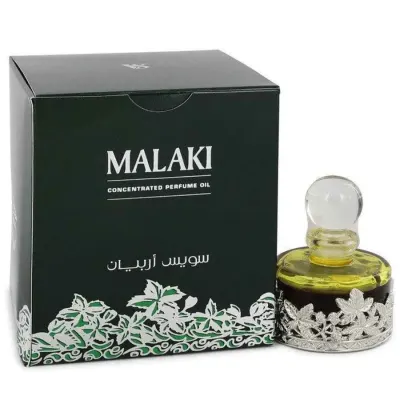
The countermeasures are a sealed inner barrier, an insert material that will not wick, and enough headspace that thermal expansion during transit does not force product past the closure. Roll-on and dab applicators are the most common leak points. We specify attar and perfume oil packaging with a moisture and oil barrier as standard rather than as an upgrade.
Tester packaging has its own rules
Counter testers exist to be handled hundreds of times by strangers. They are not retail packaging with a different label; they are a different product with a different brief.
Retailers commonly require testers to be visually distinct from sale stock so they cannot be sold by mistake, which usually means a plain or clearly marked carton. The box must also let staff put the bottle back easily, which argues for an open tray rather than a snug sleeve. Check your retailer’s specification before ordering, because these requirements vary by chain and an unusable tester run cannot be repurposed as retail stock.
Packaging Boxes: questions buyers ask
Are there shipping restrictions on alcohol-based perfume?
Yes. Alcohol-based fragrance is flammable and is treated as a limited-quantity dangerous good in most air networks, with carrier-specific rules on top. Confirm current requirements with your carrier before fixing a box size, since outer dimensions can affect allowances.
What actually causes bottles to break in transit?
Repeated small shocks that loosen atomizers, and compressive load when parcels stack overnight. Clearance and a suspending insert handle shock; board grade and a properly filled box handle compression. A half-empty carton crushes regardless of board strength.
Does perfume oil need different packaging from spray?
Yes. Oil creeps, stains paper permanently and degrades some adhesives. It needs a sealed inner barrier, a non-wicking insert and enough headspace for thermal expansion. Roll-on and dab applicators are the usual leak points.
How should tester packaging differ from retail?
Most retailers require testers to be visually distinct so they cannot be sold as stock, and staff need to replace the bottle easily, which favors an open tray over a snug sleeve. Check your retailer specification first, as it varies by chain.
Can you certify my shipment as compliant?
No. We build cartons to the dimensions and construction your carrier requires, but certifying a dangerous-goods shipment is between you and your carrier. We will not claim otherwise.
Why do you size shipping cartons to the contents instead of offering stock sizes?
Because a half-empty carton crushes even on a strong board. Compression in a stacked trailer is resisted by the contents holding the panels apart, not by the board alone. A carton sized to the bottle and its insert stays full, so the walls are supported and the box arrives square.
Which perfume oil applicators leak most often in transit?
Roll-on and dab applicators. Both have a seal that opens under thermal expansion when the parcel warms in a trailer. The countermeasures are a sealed inner barrier, an insert material that does not wick, and enough headspace in the bottle that expanding oil is not forced past the closure.
Is the oil barrier an optional upgrade on attar packaging?
No, we specify it as standard. Perfume oil creeps, stains paper permanently and degrades some adhesives, so a box without a barrier is ruined by a single small leak. The barrier and a non-wicking insert are built into the specification before we quote, not added afterwards.
Should a counter tester sit in an open tray or a snug sleeve?
An open tray. Counter staff put the bottle back hundreds of times, and a snug sleeve slows that down and gets scuffed within a week. A tray holds the bottle upright, keeps it visibly distinct from sale stock, and survives handling by strangers far better than retail packaging would.
If I over-order tester cartons, can the extras be sold as retail stock?
Usually not. Retailers require tester packaging to be visibly different from sale stock so it cannot be sold by mistake, so a tester carton is deliberately built not to pass as retail. Check your retailer's specification and order the tester quantity carefully, because the run cannot be repurposed.