Subscription & Sample Boxes
Cheap Perfume Subscription
Starting from $0.30 per box · MOQ 100
Get a quote100 boxes minimum per design · Free design support · Free shipping to the US, UK, Canada, Australia and New Zealand
Subscription & Sample Boxes
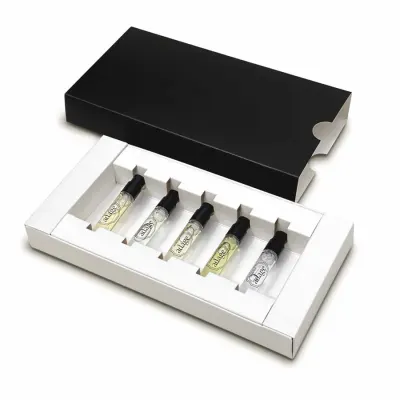
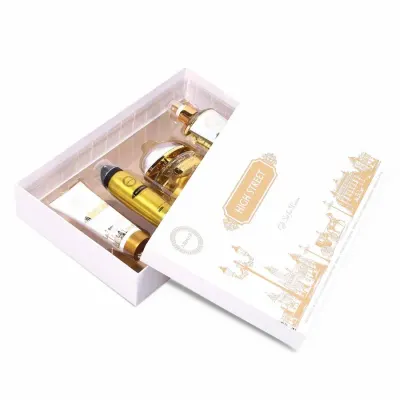
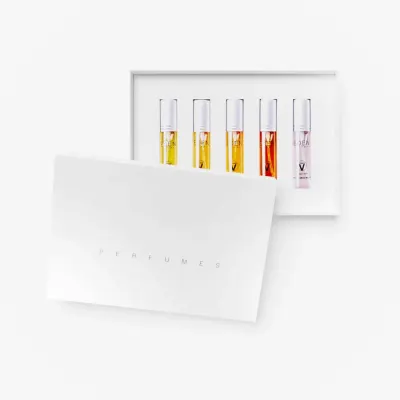
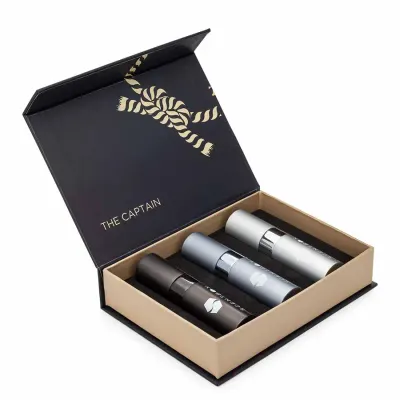
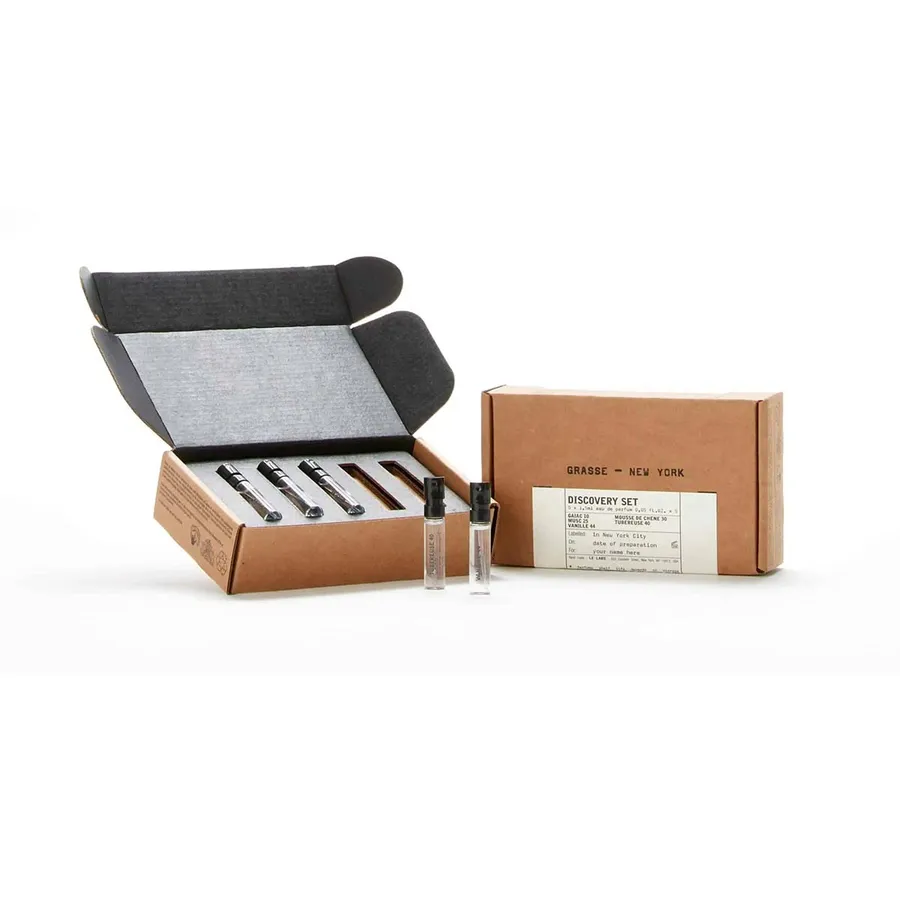
Perfume sample subscription boxes are small printed cartons with a die-cut insert that holds three, five or more vials upright for monthly mailing. Built on 12pt to 24pt board or E-flute to suit the postal route, from 100 cartons per design, with a free dieline, free proof and free shipping.
Starting from $0.30 per box wholesale
Invoice paid by
Shipped with
Free design support, free proof
Send the bottle size (or the bottle itself), the quantity you have in mind and the finish you are picturing. We reply with a firm price, a dieline and a digital proof. Nothing prints until you approve the proof, and you can cancel free before that.
Perfume sample subscription boxes are small printed cartons with a die-cut insert that holds three, five or more fragrance vials upright, sized so the whole pack can be mailed to a member each month without an outer shipper. They are ordered by subscription services that send a rotating selection of scents, by fragrance brands running a try-before-you-buy program, and by retailers that mail monthly discovery picks to loyalty members. We print them from 100 cartons per design, on board from 12pt to 24pt depending on the vial count and the postal route.
The box is the only part of the program that every subscriber touches every month, so it has to do three jobs at once: survive the mail, hold the vials still, and look the same in month twelve as it did in month one. The sections below cover each job and the decisions that affect what you pay per carton.
A subscription carton lives a harder life than a shelf box. It goes into a mailbag, gets stacked under heavier parcels and often sits in a mailbox for a day. The board choice and the structure decide whether it arrives flat and clean. Our subscription and sample box category covers the full set of structures, and the three most used for a monthly program are compared below.
| Structure | Board | Mails on its own? | Assembly at your end | Best for |
|---|---|---|---|---|
| Tuck-end carton with insert | SBS, 16pt to 24pt | Inside a padded or poly mailer | Fold, fill, tuck | Three to five vials, lowest unit cost |
| Sleeve and tray | SBS or kraft, 18pt to 24pt | Inside a mailer, or on its own for short routes | Fill the tray, slide the sleeve | Five or more vials, monthly reprint of the sleeve only |
| E-flute corrugated mailer with insert | E-flute with printed liner | Yes, addressed directly | Fold the mailer, drop in the insert | Larger sets, long postal routes, no outer packaging |
The honest answer on mailing a folding carton bare is that it depends on the route. A tuck-end carton in 24pt SBS handles a short domestic trip, but it will show corner wear over a longer one. If you want a carton that is also the shipper, the E-flute mailer is the structure to choose, and you print the liner so the inside looks like retail when it opens.
Vials that rattle arrive with loose caps and sometimes with fragrance on the card. The insert stops that. A die-cut paper insert with one cavity per vial, cut to the vial diameter, holds each one upright and apart. For 2 ml and 5 ml vials in the same box, the cavities are cut to two diameters on one insert. Foam is rarely needed for sample vials, which keeps the carton fully paper-based and easy for members to recycle.
Leave a slot in the insert for a scent-notes card or a welcome card. Printing the card instead of the carton is the cheapest way to change what the member reads each month. Many programs also leave one empty cavity so the member can store a favorite vial, which turns the box into something kept rather than discarded.
A subscription box is reordered more often than any other product we print, so the cadence matters as much as the first run. These are the steps that keep the program supplied without a stock pile in the corner.
The unit price depends on size, board, finish and quantity, and we quote it by email rather than publishing a list. What you control is which of those four you spend on. The rules of thumb below come from what we see across subscription programs, and our article on perfume subscription box unit cost works through the arithmetic in more detail.
Send the vial sizes, the number of vials per box, your expected monthly volume and the structure you prefer, and we reply with a quote within 10 hours. A free dieline and a free digital proof follow, and the first production run starts once you approve the proof and pay the invoice by card or PayPal. There is no card checkout on the site, because each carton is cut to your vials. Shipping is free to the US, UK, Canada, Australia and New Zealand, and cartons arrive flat so they store in a small space between mailings.
Made to order, quoted per job
Custom Perfume Boxes is a made-to-order printer, not a stocked shop. Prices shown are wholesale per-unit rates against a minimum of 100 boxes per design, and every order is proofed and invoiced individually, whether you order online or ask for a quote first. Made-to-order boxes cannot be returned for a change of mind; if an order arrives defective, misprinted or different from the proof you approved, we reprint or refund it in full under ourrefund and returns policy.
Add the boxes you need to your order and check out with your delivery address, or send your bottle size, quantity, board and finish for a firm quote within 10 hours, with no obligation.
Our design team prepares a digital proof at no charge. Nothing prints until you approve it, and you can cancel free up to that point.
Once the proof is approved we email a PayPal invoice (pay by PayPal balance or card through PayPal) or a bank transfer invoice; cash on delivery is available for US and Canadian addresses. No card details are taken on this website.
Printing and finishing take 2–3 business days, then 3–6 business days in transit. Delivery is free to the US, UK, Canada, Australia and New Zealand, with the windows set out in our published shipping policy.
An E-flute corrugated version can be addressed and mailed directly. A folding carton in 24pt SBS survives a short domestic route but shows corner wear on longer ones, so most programs put it inside a poly or padded mailer. Tell us the typical route and we recommend the board.
Either, and the choice affects your packing speed. A glued insert arrives fixed inside the carton so your team only drops the vials in. A loose insert ships flat with the cartons and is placed at your end, which costs less but adds a step. We can also supply it as a fold-up platform.
Yes. The cavities are die-cut to each vial diameter on the same insert, so a box can carry two 5 ml vials and three 2 ml vials in fixed positions. Send a sample of each vial so we can measure the glass and the cap, because cap width often decides the spacing.
Send print-ready files about two weeks before you need the cartons in hand. Production takes 2 to 3 business days after proof approval and transit 3 to 6 business days. If you mail on the first of the month, sending files by the middle of the previous month leaves a margin for the proof.
Only if the design will not change and you have somewhere dry to store them. The unit price falls as quantity rises, so a larger run costs less per box, but flat cartons take space and a design update makes the stock obsolete. Two to three months per run is the usual compromise.
Yes, and it is the cheapest way to change the box each month. The carton and insert stay fixed, and a printed card in a slot carries the month's name, the scent notes and any offer. The card is a small print run, while the carton can be ordered in larger, cheaper quantities.
It is the board thickness in thousandths of an inch. A 12pt tray is thin and light and belongs inside a mailer. A 24pt carton is rigid enough to protect vials in a short postal trip. We recommend the point weight once we know the vial count and whether the carton ships bare.
Yes. The insert can include a slot that holds a card upright beside the vials, or the card can lie on top of the insert under the lid. A slot keeps the card from sliding over the vials in transit. Tell us the card size and we add it to the dieline before the proof.
It uses two pieces of board and two dies rather than one, so the base cost is higher. The trade-off is that only the sleeve needs reprinting each month, which can make a sleeve and tray cheaper over a year. We quote both so you can compare them at your monthly volume.
That is a common design goal. A sleeve and tray in 24pt board with an empty spare cavity gives members a place to keep favorite vials, which makes the box less likely to be thrown away. Print the tray in a plain brand color so it looks finished without the sleeve.
Yes. A welcome edition is treated as its own design with its own 100-unit minimum. The simplest way to do it is to keep the same carton and insert and change only the sleeve or the card, so the welcome box differs in print rather than in structure.
Upright, in almost every case. Vials standing in cavities cannot roll, and any seepage from a cap stays at the bottom of the cavity rather than spreading across the card. Flat layouts suit very slim boxes, but they need a tighter cavity to stop the vial sliding end to end.
Often, yes. Standing vials set the minimum height, so a slim box usually lays vials flat in a shallow insert and spreads them across the width. Tell us the slot dimensions you are designing for and we size the carton to it and confirm the fit on the dieline.
If the new count fits the same carton footprint, only the insert changes and the carton dieline stays as it is. Going from three vials to five in the same box is usually possible with a tighter insert layout. A larger jump needs a new carton size, which we quote as a new design.
Place a top-up reorder. The minimum is 100 cartons per design and production takes 2 to 3 business days after proof approval, with 3 to 6 days in transit, so a top-up arrives in roughly two weeks. Keeping one extra month of cartons in stock covers a sudden rise without a rush.
Subscription & Sample Boxes
Starting from $0.30 per box · MOQ 100
Get a quote